What Is a Skills Assessment for Australia? Complete Guide for Skilled Migration Applicants
A skills assessment checks whether your qualification, work experience and nominated occupation meet Australian standards for skilled migration. Learn about EA, ACS, TRA, VETASSESS, ANZSCO codes, CDR, RPL and common applicant documents.
What Is a Skills Assessment for Australian PR?
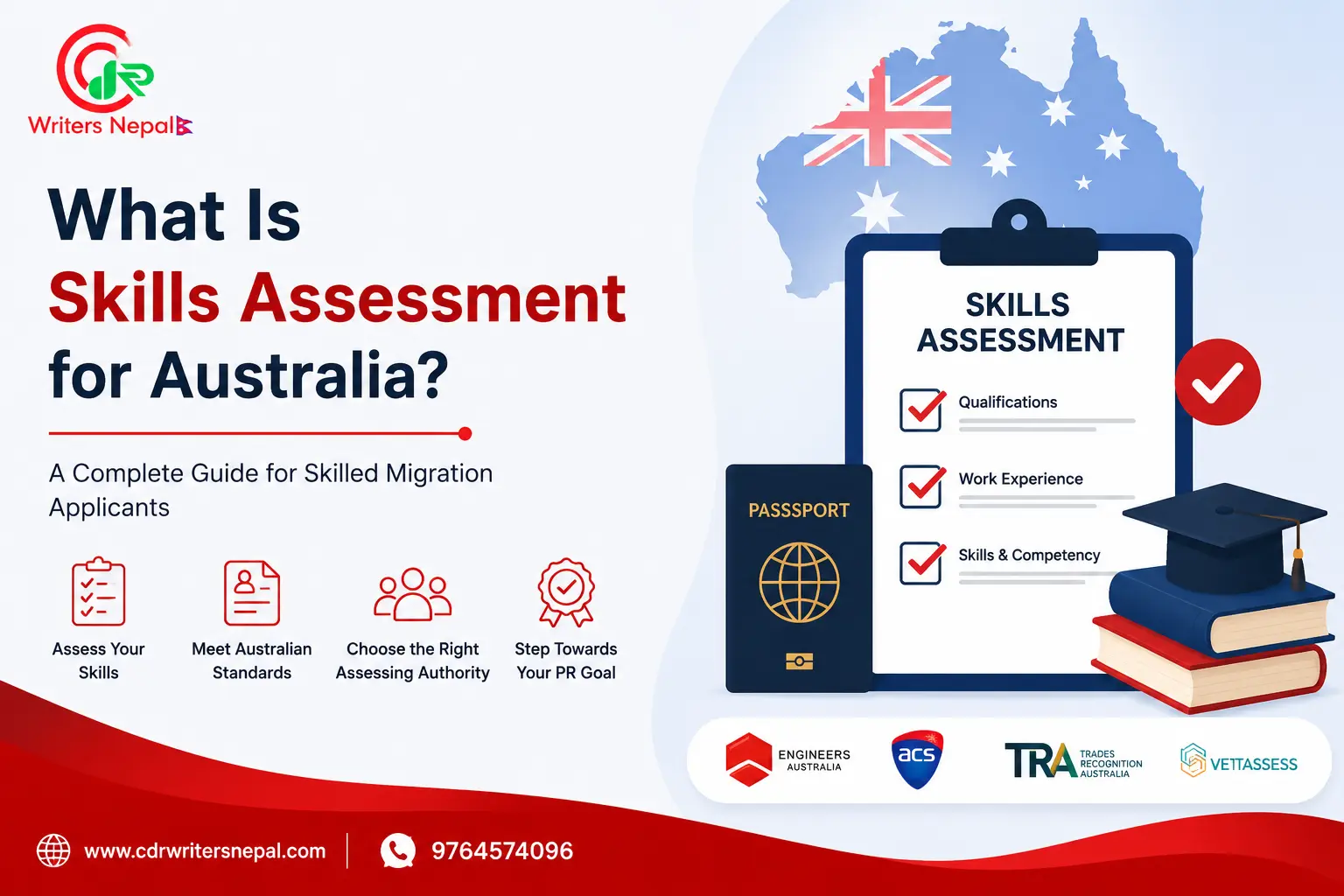
A skills assessment is an official review of your qualification, work experience, and professional competency against Australian standards. For many skilled migration pathways, this is one of the first major steps before lodging an Expression of Interest (EOI) or applying for visas such as Subclass 189, Subclass 190, or Subclass 491.
The purpose is simple: Australia wants to confirm that your education and professional background match the occupation you are claiming. This occupation is usually linked to an ANZSCO code and assessed by a specific authority such as Engineers Australia, ACS, TRA, VETASSESS, CPA Australia, or another approved body.
Why Skills Assessment Matters
A positive skills assessment helps prove that you have the required knowledge, training, and employment background for your nominated occupation. It does not guarantee PR, but it is often required before you can claim skilled migration points or move forward with your visa process.
For example, a civil engineer may need Engineers Australia assessment, an ICT business analyst may need ACS assessment, a chef or mechanic may need TRA assessment, and many professional occupations may fall under VETASSESS.
What Is an ANZSCO Code?
ANZSCO stands for Australian and New Zealand Standard Classification of Occupations. It is the system used to classify occupations such as Civil Engineer, Mechanical Engineer, Software Engineer, Electrical Engineering Technician, Chef, Accountant, or ICT Business Analyst.
Choosing the correct ANZSCO code is very important because it affects:
- your assessing authority
- required documents
- work experience evidence
- visa pathway
- state nomination options
- EOI points strategy
Before starting any skills assessment, applicants should first confirm whether their occupation is listed and which authority assesses it.
Main Skills Assessment Authorities
Different occupations are assessed by different authorities.
Engineers Australia
Engineers Australia assesses engineering occupations. Applicants may apply through accredited qualification pathways or the CDR pathway. A Competency Demonstration Report usually includes three Career Episodes, a Summary Statement, CPD record, CV, academic documents, and employment evidence where required.
ACS
The Australian Computer Society assesses ICT and technology occupations. Applicants may need to show qualification relevance, work experience, and in some cases an RPL report if their study background does not closely match ICT requirements.
TRA
Trades Recognition Australia assesses many trade occupations such as chef, automotive mechanic, electrician, welder, carpenter, and other skilled trade roles. TRA requirements depend on the applicant’s occupation and assessment pathway.
VETASSESS
VETASSESS assesses many professional and general occupations. It reviews qualification level, field of study, employment evidence, and whether the applicant’s role matches the nominated occupation.
Common Documents Required
Although each authority has different requirements, applicants commonly prepare:
- passport
- academic certificates
- academic transcripts
- CV or resume
- employment reference letters
- payslips
- tax or social security evidence
- training certificates
- project documents
- professional registration if required
- English translations if documents are not in English
For Engineers Australia, applicants using the CDR pathway also need Career Episodes, Summary Statement, and CPD.
What Is a Positive Skills Assessment?
A positive skills assessment means the assessing authority has accepted that your qualification, experience, and professional background meet the required standard for your nominated occupation.
This outcome can then support the next stages of your skilled migration journey, such as EOI submission, state nomination, or visa application planning.
Common Mistakes Applicants Make
Many applicants face delays or rejection risks because they start without checking the correct ANZSCO code or assessing authority. Others submit weak employment evidence, unclear project descriptions, generic duties, copied content, or documents that do not properly match the nominated occupation.
For Engineers Australia, one common issue is writing Career Episodes like a team report instead of explaining individual engineering contribution. For ACS, applicants may fail to explain ICT project experience clearly. For VETASSESS and TRA, incomplete employment evidence can create problems.
How CDR Writers Nepal Can Help
CDR Writers Nepal supports applicants with skills assessment documentation for engineering, ICT, trade, and professional pathways. Our services include CDR writing, Career Episodes, Summary Statement, CPD, ACS RPL report, TRA documentation support, VETASSESS application support, ANZSCO guidance, plagiarism checking, and document review.
We focus on clear technical writing, original content, proper evidence mapping, and professional presentation based on your real education and work experience.
Final Thoughts
A skills assessment is not just paperwork. It is a structured proof of your professional capability for Australian migration purposes. Before preparing your file, confirm your ANZSCO code, assessing authority, required documents, and assessment pathway.
If you are unsure where to start, CDR Writers Nepal can help you understand the right documentation path for your occupation and prepare a stronger skills assessment file.